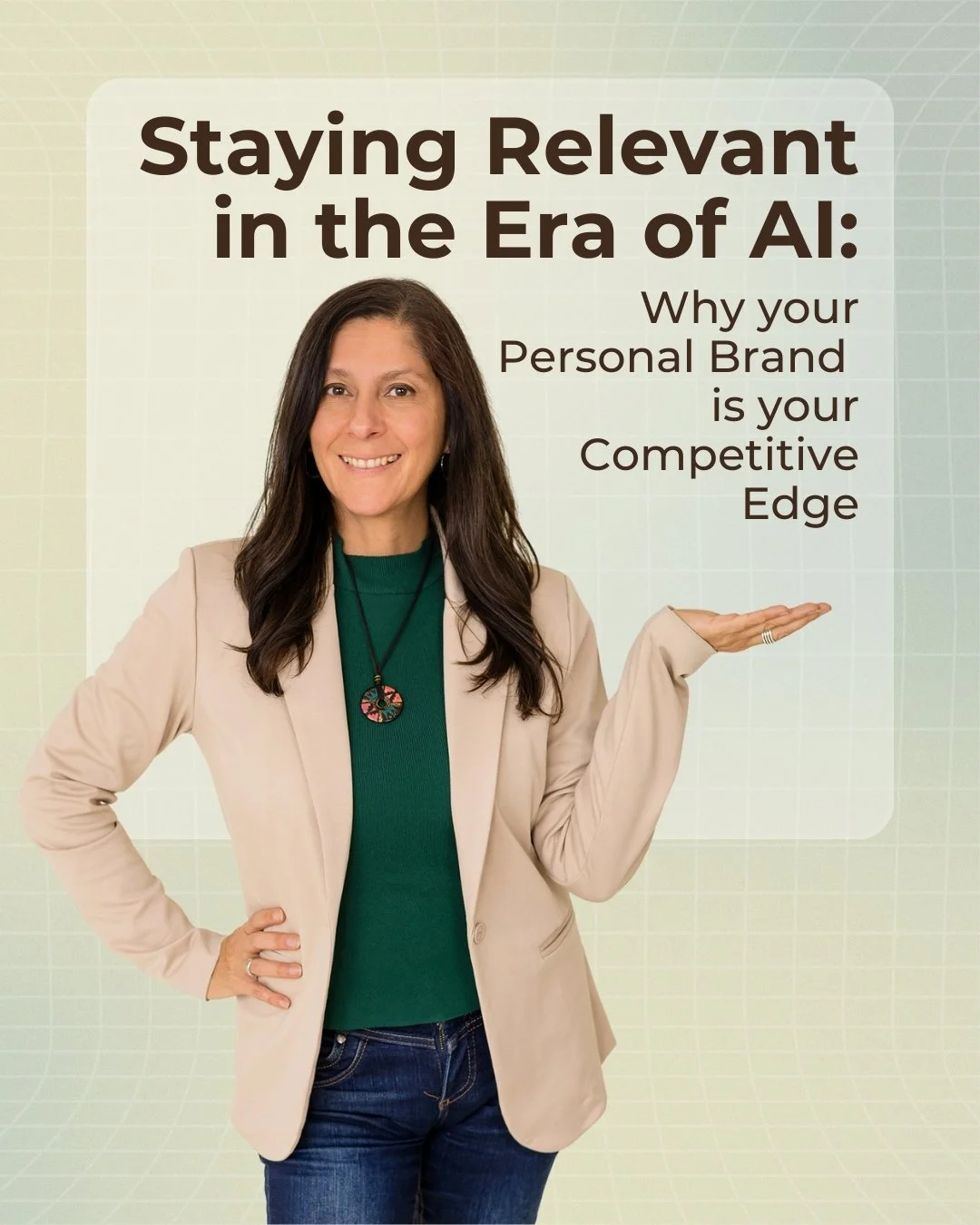
81. Staying Relevant in the Era of AI: Why Your Personal Brand is Your Competitive Edge

As a kid, we played this game called "Assassin", probably highly inappropriate in today's world, but THIS is a real story, so hear me out.
The game (which was completely analog) consisted in ripping up a sheet of paper into smaller pieces (as many as the amount of players) and on one of those papers we wrote an "X". Pieces were folded and then put into a bag, hat or whatever.
We all took a paper out, the one with the "X" was the assassin. We all sat in a big circle. The game consisted of staring at each other, and with the blink of one eye, the "assassin" could "kill" anyone. It was his/her job to "kill" as many players as possible before being caught.
If you thought you knew who it was, you could say it outloud, if you were right, the game would end, if you were wrong, you were out.
Why do I talk about this game?
Because going into the game, you KNEW you couldn't trust anyone… and the online world feels a lot like that at the moment.
The Trust Crisis We Can't Ignore
We're living in an unprecedented moment, one of those life milestones that will be discussed in history books in years to come.
With AI we are capable of generating content in seconds, mimicking voices, creating photorealistic images we can't differentiate, and producing text in seconds that sounds...well, just like everyone else.
And that's precisely the problem.
The content flooding our feeds has become BOOOO-RING!!!, it all sounds the same. The formats and "sentence structure" is repetitive.
I can almost hear ChatGPT's voice in my head when I read some of the texts… it is this robotic voice… Can you hear it too? or is it just me?
It's the same recycled insights mashed up and regurgitated in different words.
People, we are not dumb, we notice and we are getting tired of reading "average".
A recent study found that nearly 60% of consumers now doubt online authenticity.
The voices we hear are copied, altered, synthesized. This is the exact conversation I had with my 80 year old dad, who is an avid advocate of life-long learning.
So who should we listen to anymore?
We've entered what I call the "State of Trust Scarcity", where having your own perspective is a necessity.
When Everything Sounds the Same, Presence Becomes the Currency
When AI makes content creation effortless, then content itself becomes a commodity.
The real value shifts to something AI cannot replicate—YOU!!!.
Your presence. Your lived experience. Your unique perspective, which has been shaped by decades of successes, failures, and hard-won lessons.
People are actively looking for proof that there's a real human behind, (I know I do!), to know if what they're consuming is real and worth their time.
They're searching for clues of authenticity.
But as AI outcomes become better, it is getting increasingly harder to differentiate what is real versus what's been generated. And the big question is… who can we trust?
This is a crisis, but like with everything in life.... There are two sides to every problem and this CAN be YOUR opportunity to STAND OUT from the mass.
The Conflict: We Need to Reach People, But They Don't Trust What They See
So here's the challenge many of us face: as business owners, consultants, and experts, we need to reach a wider audience. We want to bring our message to more people to create impact.
It is unthinkable to even consider losing the digital space… how could we abandon the potential for such a wider audience?
But the online space is now saturated with AI-generated noise and it's getting harder to cut through.
How do we solve this conflict?
By creating thought leadership content that is genuine, unmistakable and undeniably your OWN.
We need to hone our own original thought grounded in our lived experience.
And searching for the courage to challenge conventional wisdom and offer a different perspective, even… when it's not widely accepted.
This means showing not just what you know, but why it matters. Linking your insights to real results. And yes! sharing your failures alongside your successes (which is the hardest part if you ask me!).
And here's what most don't realize: the problem isn't your expertise—it's your visibility. The experts who own their thought leadership don't just get more exposure. They become the go-to authority in their field. They attract premium clients, investors, speaking invitations, and opportunities that come to them—instead of constantly chasing.
A Quick Confession: I'm Not an AI Hater
Let me be clear about something: I'm not against AI. Far from it.
I remember back in high school, I had to deliver two projects for my Social Studies teacher and my Civics teacher—who just happened to be the same person. One project was about the Toltecs and Mixtecs. Information was scarce, only available in Spanish, and I was supposed to deliver it in English. Both projects were due the same week.
I was so stressed that my eyes started swelling, which made meeting the deadline even harder. The solution? My mom ended up hiring her cousin to help me translate and type one project while I worked on the other. My eyes got better.
I wish I had had AI back then.
I fully embrace AI as a tool to help us create things we would never dream of creating on our own. To bring our ideas to life faster. To translate, to research, to draft, to brainstorm.
But here's the thing: AI is the assistant, not the author. It can help you execute, but it cannot replace your perspective, your judgment, your lived experience. And that's exactly why having your own criteria and point of view becomes more important than ever—not less.
Your Imperfections, Your Struggles Are Your Superpower
This is where it gets uncomfortable for most of us.
We've been conditioned to present our polished selves, especially in the business environment.
We are encouraged to showcase only the wins. To project an image of having it all figured out. The judgement of showing flaws in the corporate world becomes even more ruthless.
But in a world drowning in artificially perfect content, imperfection and storytelling is what makes you believable.
The times you failed spectacularly before you succeeded. These are the stories no algorithm can fabricate because they require actually living through them.
AI doesn't have a life, it draws from data, from other people's lives.
It doesn't have scars, it didn't have to suffer through loss, disappointment or experience extreme happiness. But you do.
It's the combination of everything you are: your formative years, your business experience, the places you've lived, the challenges you've overcome.
The filter through which you evaluate everything around you are your values. This unique combination is something AI will never replicate.
The Courage to Go Against the Grain
Here's the hardest part: standing out means being willing to stand alone.
As humans, we're wired for belonging. We seek conformity because it feels safe. We want to fit in with our industry peers, our network, our community. But conforming means blending in and blending in means disappearing into the noise.
Brené Brown's research helps us understand the concepts of "fitting in" and "belonging".
She puts it simply: "If I get to be me, I belong. If I have to be like you, I fit in."
The choice is clear, even if it isn't easy. True belonging means belonging to yourself first, being who you are, not who you think others want you to be.
And in a sea of AI-generated sameness, being authentically yourself isn't just brave. It's your competitive advantage, it is strategic.
What This Means for Your Personal Brand
So what do we do with all of this? How do we translate these insights into action?
Own your story: all of it. Not just the highlight reel. The setbacks that shaped you. The pivot that almost broke you. The lesson you learned the hard way. These aren't weaknesses to hide; they're differentiators no AI can copy.
Be intentional about your presence. Personal branding isn't about creating a facade. It's about deliberately and authentically showcasing who you actually are. Your values. Your perspective. Your unique way of solving problems.
Create thought leadership, not just content. There's a difference. Content fills space. Thought leadership shapes conversations. It comes from deep expertise combined with real-world application combined with the courage to have a point of view.
Build trust through consistency. Show up as yourself, repeatedly, over time. Let people see the real you—not a polished persona, but a human being with expertise, opinions, and yes, imperfections.
Choose belonging over fitting in. Stop trying to sound like everyone else in your industry. Stop mimicking what the algorithm seems to reward. The world has enough generic content. It needs more of you.
Show up as the expert you're becoming. This isn't faking it, it's aligning your presence with your future vision. When you claim your authority before you feel "ready," you're not pretending. You're giving yourself permission to grow into who you're already becoming. We're all works in progress.
Can You Become a Thought Leader?
During an interview with Katharina Engelhardt for her Podcast: "It's in You!", I mentioned that I often tell those who say they don't want or can't be Thought Leaders the following: "If you have thoughts, that are yours, guess what, you CAN be a thought leader! You have everything you need" (link to episode)
Let me ask that question again, for those who actually care: Can you become a Thought Leader, not someday, not after having reached a certain amount of experience… but NOW?
Think you're too young? Malala Yousafzai was 17 when she became the youngest Nobel Peace Prize laureate, advocating for girls' education worldwide. Greta Thunberg was 15 when she started her climate strikes outside the Swedish parliament and sparked a global movement. They didn't wait for permission. They had a perspective, and they shared it.
Think you're too old? Arianna Huffington launched The Huffington Post at 54. The late Jane Goodall transitioned from scientist to global activist at 52 and continued inspiring millions until the age of 91.
Age is not a credential. What matters is that you have a unique perspective, born from your lived experience, and the courage to share it.
The world doesn't need more people waiting until they feel "qualified." It needs voices willing to stand for something, even if that something goes against the grain.
The Bottom Line
I believe we are reaching a tipping point.
AI has made content creation easier than ever, and as a result, earning people's trust in the online space has become harder than ever as well.
The businesses and individuals who will thrive aren't those with the best AI tools. They're those who lean into what AI cannot do: be genuinely, vulnerably, unmistakably human and CAN use AI tools to amplify their message.
Your humanity isn't a liability in the AI era. And you can use it to build a Personal Brand that gives you the competitive advantage to create the impact you envisioned.
The question is: are you willing to own it?
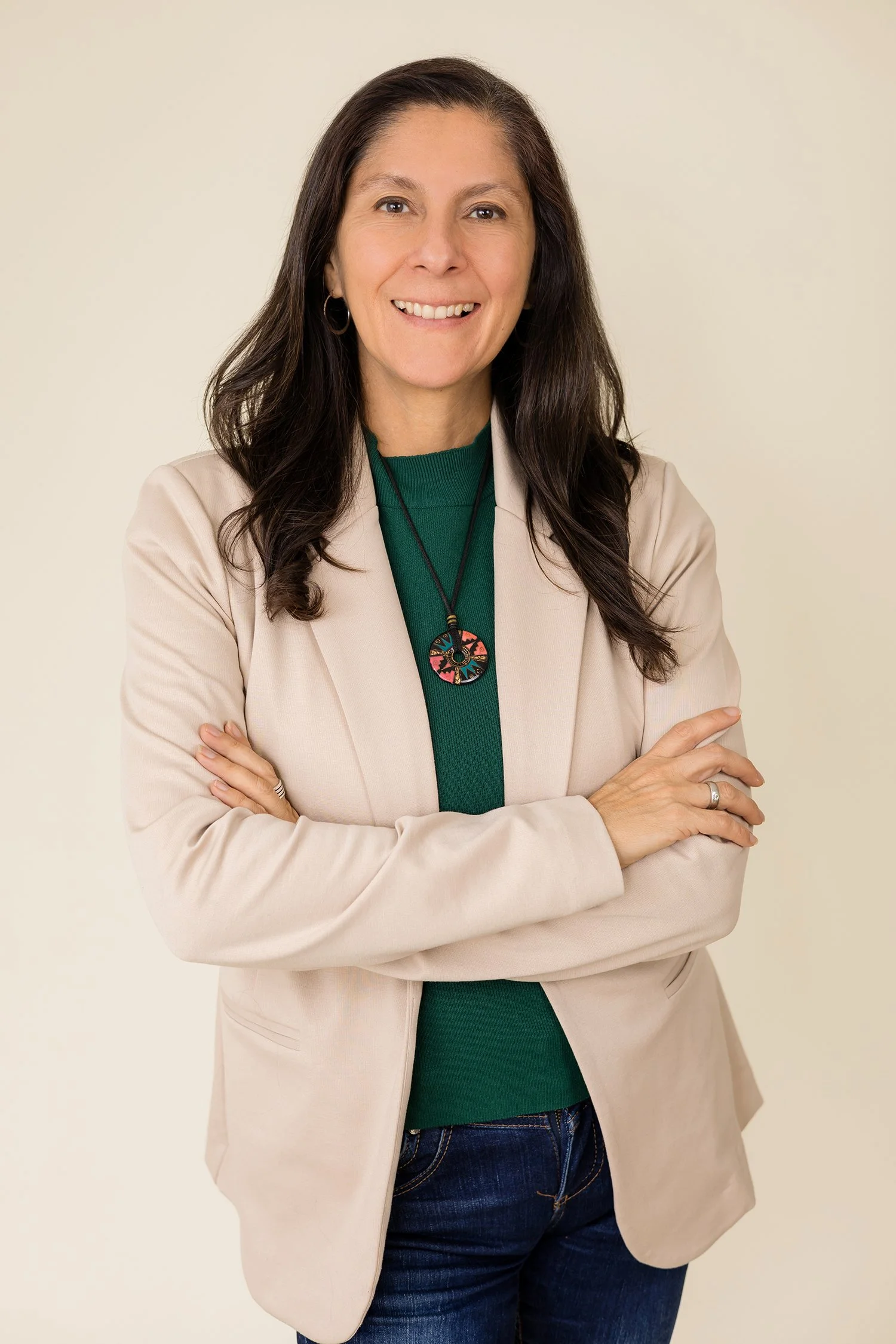
About Blanca
I'm a Personal Brand Strategist and TEDx Speaker helping accomplished experts become the go-to authority in their field.
You've already built the expertise. I bring the strategic positioning and visual identity to make sure the right people see it.
With 10+ years in corporate (Siemens, Nestlé, Gates Foundation) and a Master's in Marketing, I understand both the corporate world and the journey of building a business around your expertise. That's what makes my approach different.
I speak on Personal Branding, Visual Identity, Thought Leadership in the AI Era, Entrepreneurship as an Expat, and The Power of Reinvention.
Ready to become the go-to authority in your field?